When something goes wrong at work, organizations tend to respond in predictable ways.
A risk appears.
An incident happens.
A mistake repeats.
A compliance concern emerges.
Performance drops.
And almost immediately, someone says:
“We need training.”
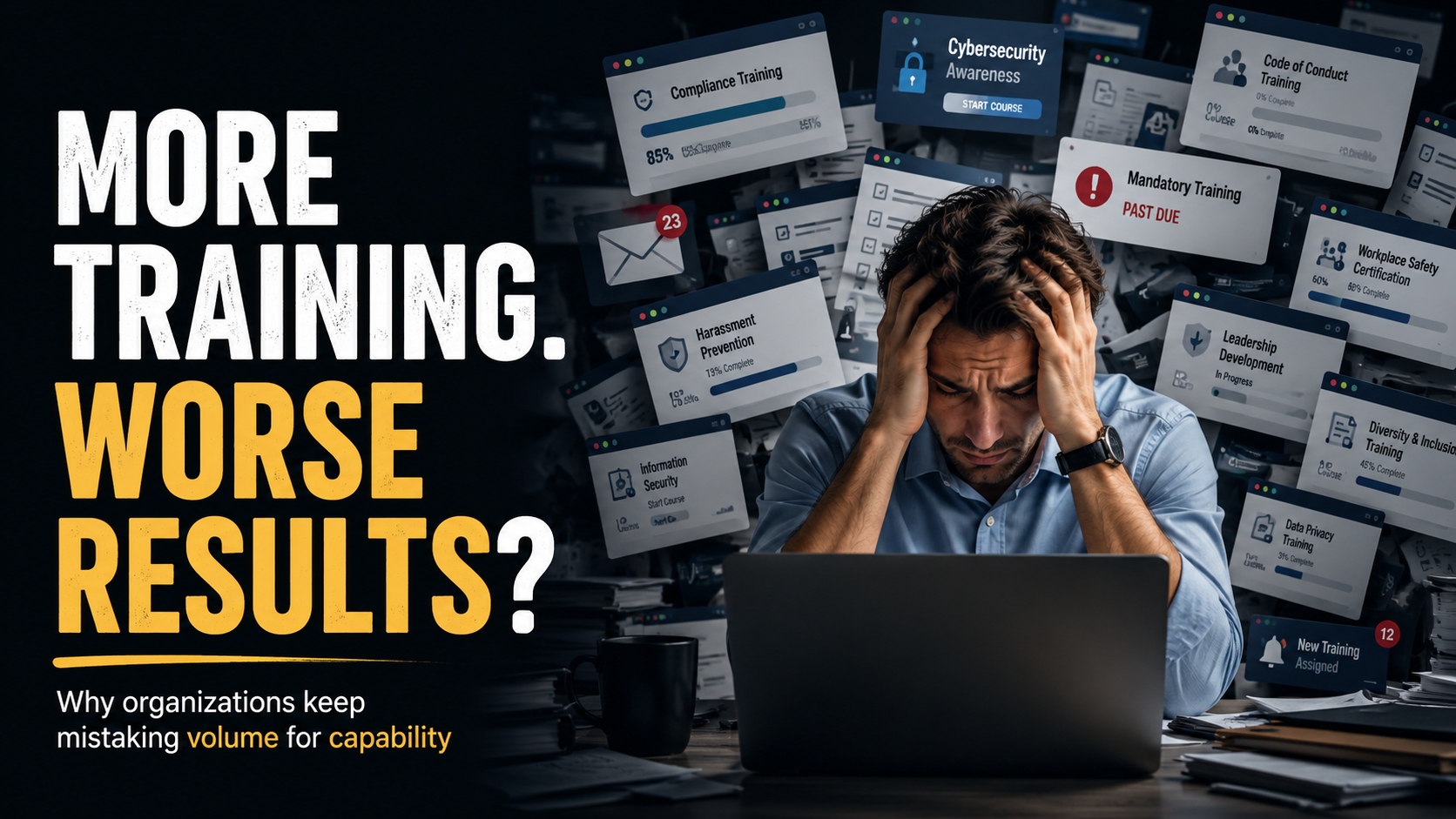
More training.
Longer training.
Additional modules.
Refresher sessions.
Extra awareness.
More content.
More coverage.
More time.
On the surface, this feels responsible.
Thorough.
Safe.
Defensible.
But there is an uncomfortable reality many organizations quietly struggle with.
More training often changes very little.
People still make mistakes.
The same risks return.
The same behaviors continue.
The same performance issues show up again six months later.
Which raises an important question:
What if more training is sometimes making the problem worse?
There are five reasons this happens. But the final one matters most because it explains why organizations often confuse training volume with capability.
5. Organizations Treat Training Like Insurance
Many leaders think about training this way:
If we cover more material, risk goes down.
Reasonable assumption.
Unfortunately, people do not become better performers because they were exposed to more information.
Exposure is not capability.
Most employees already operate in environments filled with competing priorities, interruptions, deadlines, and cognitive overload.
Adding more content does not automatically improve judgment.
Sometimes it simply adds noise.
And when people are overwhelmed, something predictable happens.
They forget.
Not because they are careless.
Because humans have limits.
This becomes even more problematic when organizations try to solve every issue with information.
4. Training Gets Asked to Solve Problems It Cannot Fix
This pattern happens everywhere.
A process breaks.
Someone requests training.
A quality issue appears.
Training gets assigned.
A compliance concern emerges.
Training gets added.
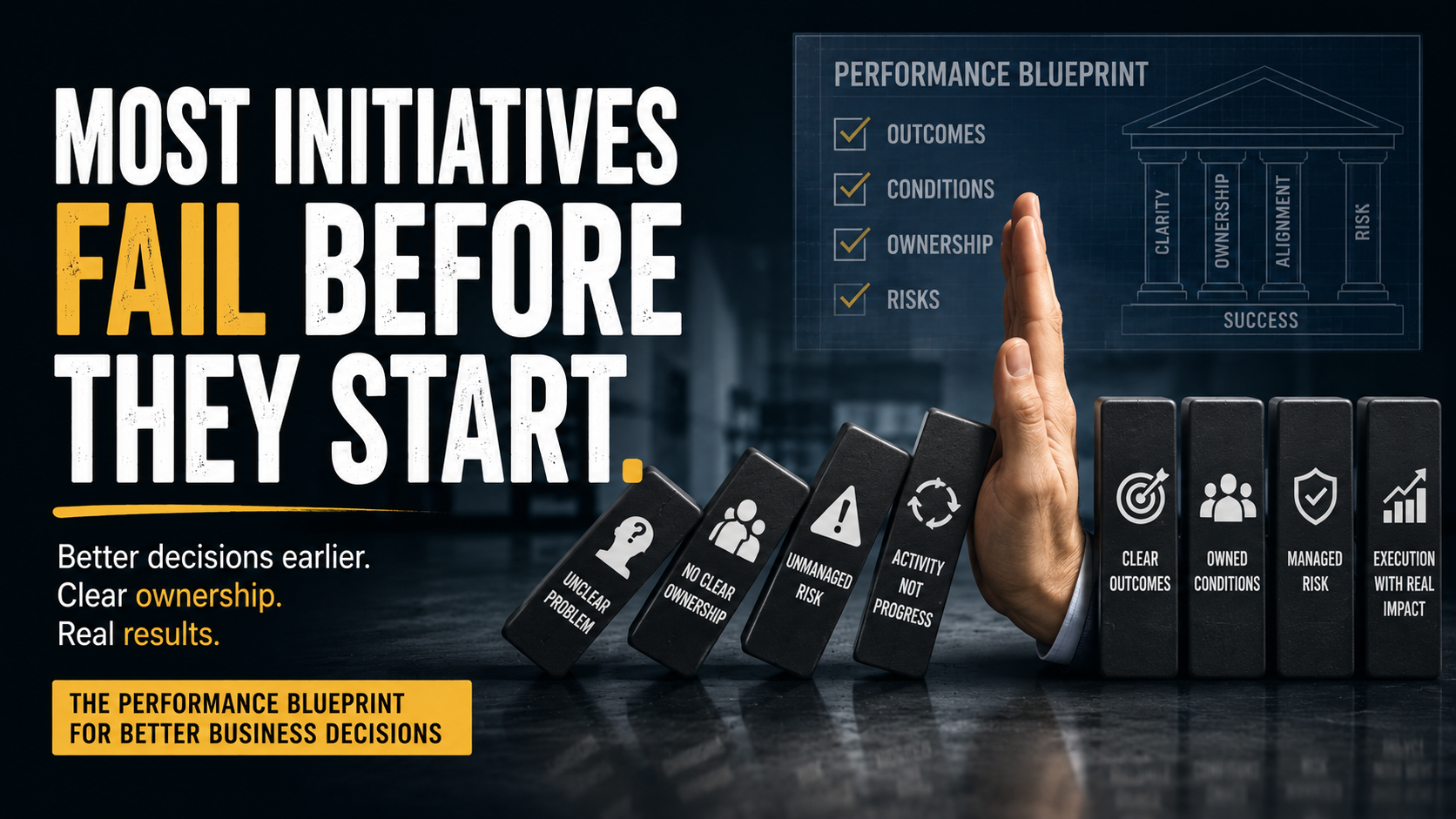
But not every problem is a capability problem.
Sometimes employees already know what to do.
The issue is workflow.
Or unclear expectations.
Or manager inconsistency.
Or broken systems.
Or competing priorities.
Or environmental barriers.
Training becomes the default response because it is visible.
It feels like action.
But activity is not the same as improvement.
And this creates another issue most organizations underestimate.
3. More Content Often Reduces What People Actually Retain
There is a hidden assumption behind many training decisions:
More information equals better preparation.
But real performance rarely works that way.
When training tries to cover everything, people often remember very little.
The signal gets buried in the noise.
Critical moments become harder to recognize.
Important decisions lose clarity.
Employees leave training with awareness but without confidence.
This is especially true in compliance-heavy environments.
Longer programs feel safer.
Yet overload can create false confidence.
People think:
“I completed the training.”
Without actually being ready to perform.
Because training volume is not the same thing as readiness.
And even organizations that reduce content often miss another issue entirely.
2. Training Is Rarely Built Around the Moment of Risk
Most training focuses on information.
Real performance depends on moments.
A difficult customer interaction.
A privacy concern.
A clinical escalation.
A leadership decision.
A safety judgment.
A conduct issue.
Performance fails at specific moments.
Not across entire manuals.
Yet many programs still teach broadly rather than preparing people for the decisions that actually matter.
The question should not be:
What should people know?
The better question is:
What must people do correctly when risk appears?
This changes everything.
Because it shifts training from coverage to performance.
Yet even organizations that improve focus often miss the biggest issue of all.
Because the deepest problem starts with how training itself is defined.
1. Most Organizations Confuse More Training With Better Training
This is the issue many leaders struggle to see.
Training does not become more effective because it becomes longer.
Or broader.
Or more comprehensive.
In fact, the opposite is often true.
Good training is not about maximum coverage.
It is about sufficient capability.
Just enough.
Enough for someone to perform safely.
Enough to make the right decision.
Enough to recognize risk.
Enough to act correctly when conditions are difficult.
Nothing unnecessary.
Nothing added for comfort.
Nothing included simply because “more feels safer.”
Because people do not perform better after seeing more information.
They perform better when they can act correctly at the moment that matters.
This changes the role of training completely.
The goal stops being:
How much can we include?
And becomes:
What is the minimum required for successful performance?
That is a very different conversation.
And often a much more effective one.
This is exactly why I wrote Just Enough Training.
Not to argue against training.
But to help organizations stop mistaking volume for effectiveness and start designing learning around performance, judgment, and real-world execution.
Because the safest organizations are not always the ones that train the most.
They are often the ones that train with precision.