Most executive conversations about AI focus on technology.
What tools are we adopting?
How much productivity will we gain?
Where can we automate?
Those are important questions.
But there is another question that matters just as much — and it rarely gets asked.
“How prepared is our workforce to make good decisions in an AI-augmented environment?”
Because AI is changing the nature of work in a very specific way.
It is increasing the amount of information, analysis, and recommendations available to employees at every level of the organization.
Which means the human role is shifting.
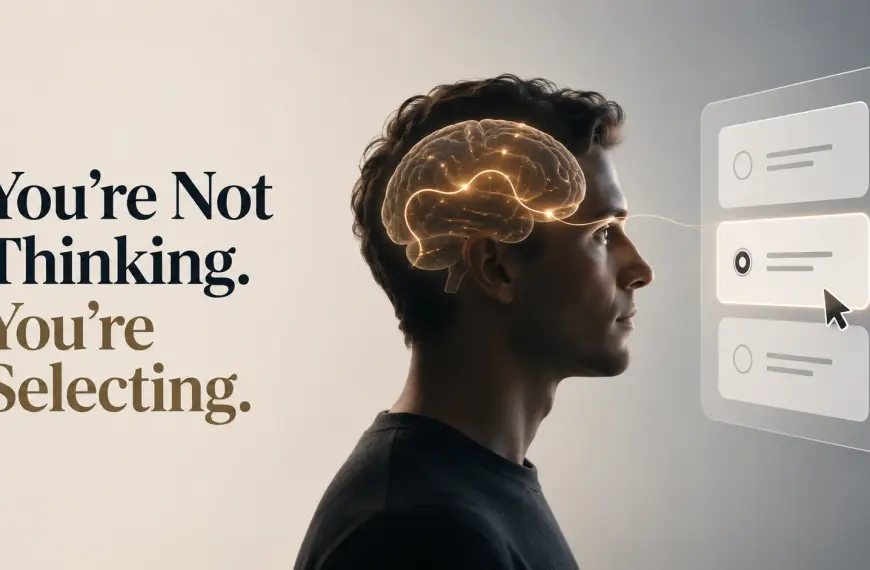
People are spending less time producing analysis and more time interpreting it, validating it, and deciding what to do with it.
That sounds subtle.
In reality, it is a major capability shift.
AI amplifies judgment — good or bad
When technology increases leverage, it amplifies whatever capability already exists in the system.
If employees have strong judgment, contextual awareness, and systems thinking, AI can significantly improve performance.
If those capabilities are weak, AI can accelerate poor decisions just as quickly.
That is why the real risk in many organizations is not tool adoption.
It is decision fragility.
This is where CLOs play a critical role
Many learning strategies right now are focused on AI literacy:
- prompt techniques
- tool usage
- platform capabilities
Those are necessary.
But they are not sufficient.
Organizations also need to strengthen the human capabilities that sit around the technology:
• pattern recognition
• systems thinking
• risk awareness
• contextual judgment
• cross-domain understanding
Those capabilities determine whether AI becomes a force multiplier or a liability.
The second question CEOs should ask
Once AI tools are deployed, the next logical question becomes:
“How quickly can our workforce adapt as roles evolve?”
Skill cycles are shrinking.
Roles are shifting.
Teams are restructuring.
If the organization cannot retool quickly, productivity gains from technology can easily be offset by capability gaps.
This is where the modern L&D function becomes critical.
Not as a training provider — but as a capability engine that helps the organization adapt without losing momentum.
What forward-looking organizations are doing
The most effective organizations are starting to rethink L&D in three ways:
They focus less on learning programs and more on capability systems.
They shorten learning cycles so employees can retool quickly when roles change.
And they invest in decision capability, not just technical skill.
Because in an AI-enabled workplace, judgment becomes one of the most valuable capabilities an organization can build.
Technology will continue to evolve quickly.
The organizations that thrive will not necessarily be those with the most advanced tools.
They will be the ones whose people can adapt, interpret, and decide well as the environment changes.
And that capability rarely develops by accident.
#LND #FutureOfWork #LeadershipDevelopment #AI #WorkforceTransformation #CLO #OrganizationalCapability