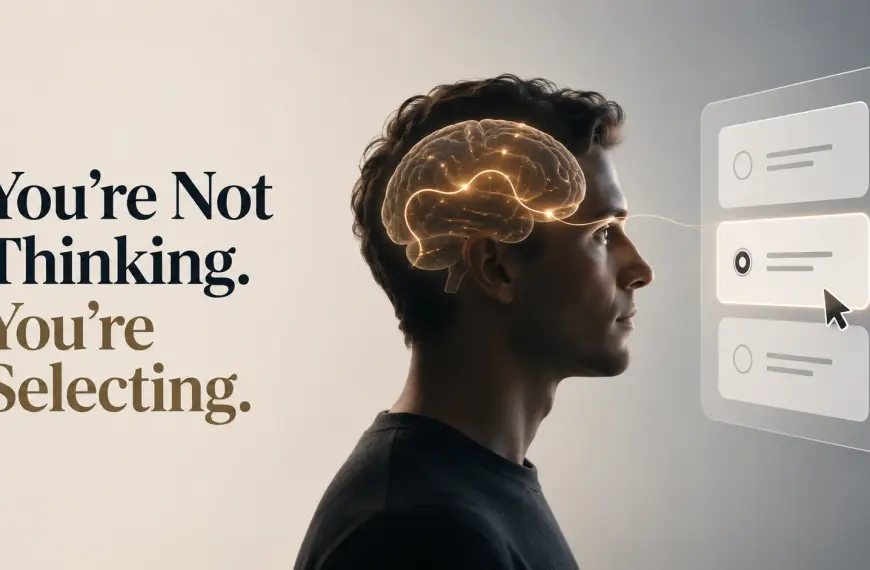
Dr. Ravinder Tulsiani explains why the future of learning and development is not more content, but workforce capability, AI readiness, behaviour change, and measurable business performance.
The Future of L&D Is Workforce Capability
The future of learning and development is not more content.
It is not more courses.
It is not more platforms.
It is not even faster training production with AI.
The future of L&D is workforce capability.
That distinction matters because organizations are under pressure from AI, automation, regulation, workforce transformation, leadership gaps, and constant change. In that environment, learning teams cannot define their value by how much content they produce or how many people complete training.
The stronger question is this:
Can people perform better when it matters?
Why Traditional L&D Is Under Pressure
For years, many learning strategies were built around access to information.
Courses helped distribute knowledge.
Learning platforms helped organize content.
Training calendars helped coordinate development.
Completion reports helped show activity.
That model made sense when information was harder to access.
But AI has changed the value equation.
Information is now abundant. Employees can summarize, search, ask, draft, and generate support in seconds. If L&D’s main value is packaging information, AI has already compressed that value.
This does not make L&D less important.
It makes the standard higher.
L&D must move from information delivery to capability building.
Activity Is Not Capability
One of the biggest risks in the future of L&D is confusing activity with progress.
More courses do not automatically create stronger capability.
More completions do not automatically improve execution.
More AI-generated content does not automatically improve performance.
More learning technology does not automatically make a workforce ready.
Organizations need to stop asking only, “What training should we build?”
They need to ask, “What capability does the organization need, and what system will help people apply it in the flow of work?”
That shift changes everything.
What Capability Requires
Capability is more than knowledge.
It includes judgment, behaviour, confidence, tools, workflow support, manager reinforcement, practice, feedback, governance, and evidence.
A person may understand a concept but still struggle to apply it under pressure.
A team may complete a leadership program but still fail to make better decisions.
An employee may attend AI training but still lack the judgment to know when to trust, challenge, or reject AI output.
Capability requires more than exposure.
It requires application.
The Role Of AI Readiness
AI readiness will become one of the central responsibilities of modern L&D.
But AI readiness should not be reduced to prompt training.
Prompt training is tool literacy.
AI readiness is broader. It requires role clarity, risk awareness, workflow integration, governance, critical thinking, ethical use, and the ability to evaluate AI output in context.
The question is not whether employees know how to use an AI tool.
The question is whether they can use AI to make better decisions, improve execution, reduce risk, and support measurable business outcomes.
That is a capability question.
From L&D Function To Capability System
The future L&D function must operate less like a content factory and more like a capability system.
That means connecting learning work to business priorities, workforce risks, role expectations, performance gaps, and evidence of impact.
A modern capability system should help leaders:
- Diagnose capability gaps before building solutions
- Identify whether the issue is knowledge, judgment, workflow, systems, leadership, or reinforcement
- Design support that fits the work, not just the LMS
- Use AI to accelerate the right work, not produce more irrelevant content
- Build role-based AI readiness
- Reinforce behaviour through managers and workflow support
- Measure whether performance actually improves
This is where L&D becomes strategically relevant.
Not because it owns training.
Because it helps the organization become more capable.
What L&D Professionals Must Become
The future L&D professional cannot survive as a course producer alone.
AI will continue to make basic content production faster, cheaper, and easier.
The more valuable L&D professional will be the one who can diagnose performance problems, challenge weak requests, structure learning systems, design practice, support behaviour change, and evaluate whether capability has improved.
The future role is not content factory worker.
The future role is capability architect.
That role requires stronger business understanding, better diagnostic thinking, sharper judgment, and the ability to use AI without surrendering ownership of the problem.
The Shift Leaders Need To Make
Executives and learning leaders should stop measuring L&D primarily by volume.
The better measures are:
Are critical capability gaps closing?
Are people making better decisions?
Are teams executing more effectively?
Are employees using AI responsibly and productively?
Are managers reinforcing the right behaviours?
Is learning reducing operational, compliance, leadership, or performance risk?
Can we show evidence that capability improved?
These are the questions that will define the future of L&D.
The Throughline
My earlier work in learning and development explored trends such as technology integration, microlearning, remote learning, analytics, continuous learning, personalization, collaboration, and leadership development.
Those trends still matter.
But the deeper issue is not the trend.
The deeper issue is whether those trends help build workforce capability.
That is the standard learning teams now need to meet.
The future of L&D is not about creating more activity.
It is about building the capability, judgment, and readiness people need to adapt, execute, and perform in an AI-shaped world.