Dr. Ravinder Tulsiani explains how his work in leadership, training, and instructional design evolved into workforce capability, AI readiness, learning strategy, and measurable performance improvement.
From Training Expertise to Capability Systems
Earlier in my career, much of my work focused on leadership development, training design, instructional effectiveness, and professional growth. That work was important because organizations needed better ways to help people communicate, lead, learn, and execute.
That foundation still matters.
But the work has evolved.
The challenge facing organizations today is not simply how to create more training. It is how to build the capability people need to perform in changing, complex, and AI-shaped environments.
Why Training Alone Is Not Enough
Training can be useful. It can introduce concepts, build awareness, create shared language, and support skill development.
But training is only one part of capability.
Capability is broader. It includes judgment, behaviour, workflow support, manager reinforcement, access to tools, operating conditions, feedback, governance, and evidence of performance improvement.
A course may help. A workshop may help. A learning platform may help.
But none of those automatically prove that people are more ready, more capable, or better able to execute.
That is why my current work focuses on workforce capability, AI readiness, learning strategy, capability building, behaviour change, and measurable learning impact.
The Shift From Learning Activity To Business Performance
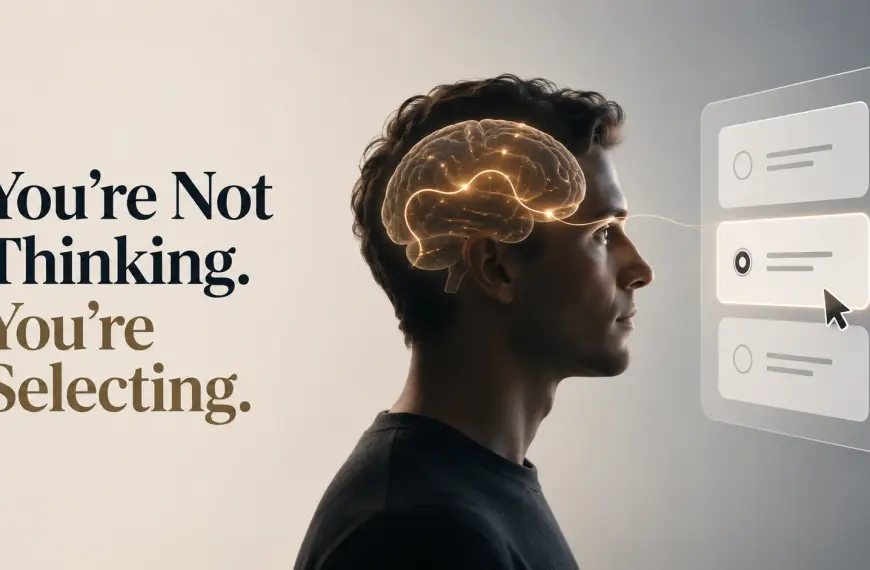
One of the most persistent mistakes in learning and development is treating activity as impact.
More courses do not always create better capability.
More content does not always improve decision-making.
More completions do not always change behaviour.
More AI-generated training does not automatically improve performance.
Organizations need a stronger discipline: diagnose the real capability gap before building the solution.
That means asking better questions before creating another course:
What business condition needs to improve?
What must people be able to do differently?
What is preventing performance today?
Is the issue knowledge, judgment, confidence, workflow, systems, incentives, leadership, or reinforcement?
What evidence would prove that capability has improved?
These questions move learning from activity to performance.
The Role Of Diagnostic-First Learning Strategy
My current approach is diagnostic-first.
Before recommending training, leaders need to understand the actual constraint. Sometimes the answer is a course. Sometimes it is a decision aid, coaching system, workflow support, manager reinforcement, communication reset, practice environment, or AI-enabled performance support.
The goal is not to produce more learning assets.
The goal is to build the capability required for better execution.
This is the purpose behind my current work on capability systems, including the Capability Operating System, Domino Map, AI Capability System, Performance Blueprint, Just Enough Training, and Learning Impact Standard.
These frameworks are designed to help leaders connect business priorities to workforce readiness, behaviour change, and measurable performance evidence.
Why AI Raises The Stakes
AI is accelerating the pressure on organizations.
It can generate content quickly. It can support employees in the workflow. It can help personalize learning, summarize information, draft practice scenarios, and reduce manual effort.
But AI also exposes weak learning strategy.
If the wrong problem is diagnosed, AI will help build the wrong solution faster.
If completion is treated as impact, AI will help produce more activity without improving capability.
If employees are trained on tools without judgment, governance, and role clarity, organizations will create risk instead of readiness.
AI readiness is not just tool training. It is the capability to use AI responsibly, effectively, and in context.
That requires human judgment, clear standards, workflow alignment, risk controls, and evidence of value.
The Throughline In My Work
The throughline across my work has remained consistent: learning should help people perform better.
Earlier work focused more directly on leadership, training, instructional design, and professional effectiveness.
My current work builds on that foundation and expands it into workforce capability, AI readiness, learning strategy, capability systems, and measurable business performance.
The question is no longer only, “What training should we create?”
The better question is, “What capability does the organization need, and what system will help people apply it when performance matters?”
That is the shift.
From training activity to workforce capability.
From content production to performance evidence.
From generic upskilling to diagnostic-first capability systems.
From learning as an event to learning as a measurable business system.