Dr. Ravinder Tulsiani explains why a culture of continuous learning must move beyond curiosity and content consumption toward workforce capability, AI readiness, behaviour change, and measurable business performance.
Continuous Learning Must Build Workforce Capability
Curiosity matters.
Organizations need people who ask better questions, challenge assumptions, learn continuously, and adapt to change.
But curiosity by itself is not enough.
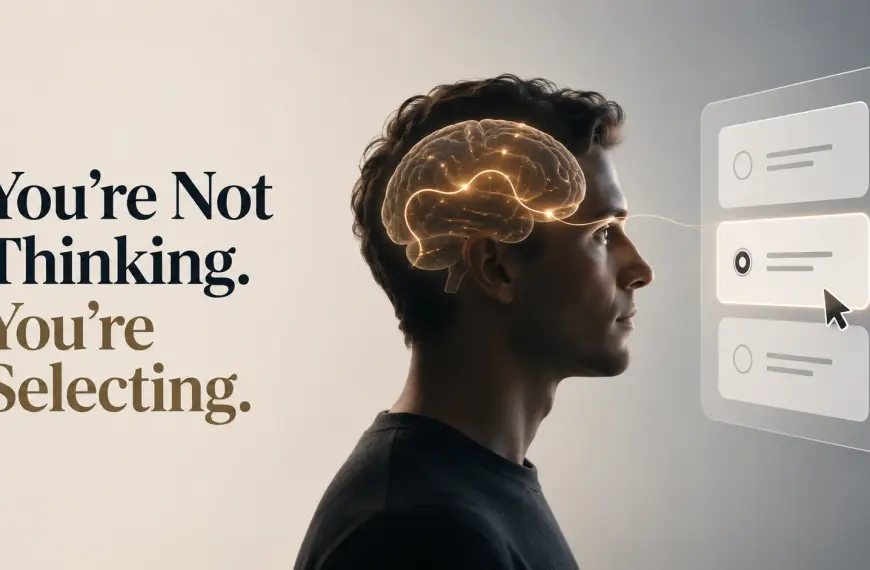
A culture of continuous learning should not be measured only by how much people explore, read, attend, watch, or discuss.
The stronger standard is whether continuous learning helps people build the capability, judgment, and readiness required to perform better when the work matters.
That distinction matters because learning activity can look impressive without changing performance.
The Problem With Treating Curiosity As The Outcome
Many organizations say they want a culture of continuous learning.
They encourage employees to take courses, attend webinars, read articles, join communities, explore content libraries, and stay curious.
Those are useful behaviours.
But they are not the final outcome.
Curiosity can open the door to learning, but capability determines whether learning improves work.
A curious employee may consume more content and still struggle to apply judgment.
A team may attend learning events and still repeat the same mistakes.
An organization may promote continuous learning and still fail to close critical capability gaps.
That is why continuous learning must be connected to performance.
From Learning Culture To Capability Culture
A learning culture becomes more valuable when it becomes a capability culture.
That means learning is not only encouraged. It is connected to what the organization needs people to do better.
A capability culture asks stronger questions:
What capability does the organization need?
What must people be able to do differently?
Where are performance gaps showing up?
What decisions are people struggling to make?
What behaviours need reinforcement?
What support is needed in the flow of work?
What evidence would show that learning improved performance?
These questions move continuous learning from a general aspiration to a business system.
Why Continuous Learning Needs Diagnosis
One of the risks of continuous learning is that it can become unfocused.
People may learn many things, but not necessarily the things that matter most.
Organizations may invest in platforms, libraries, pathways, and events without diagnosing the real capability gaps behind business performance.
That creates the appearance of progress.
But progress should not be defined by activity.
It should be defined by readiness, behaviour change, execution, and measurable improvement.
A strong continuous learning culture starts with diagnosis. It identifies what people need to learn, where they need support, how they will apply it, and how the organization will know whether capability improved.
AI Raises The Standard
AI has made continuous learning more urgent.
Roles are changing faster. Skills are becoming outdated more quickly. Employees need to adapt, experiment, evaluate information, and make decisions in new ways.
But AI also creates a new risk.
It makes learning content easier to produce and easier to consume.
That can create more noise.
More articles.
More summaries.
More courses.
More prompts.
More AI-generated resources.
More activity.
The issue is not whether people have access to learning. The issue is whether they can use learning and AI to improve judgment, execution, and performance.
AI readiness is not just tool familiarity. It requires role clarity, critical thinking, governance, risk awareness, workflow alignment, and the ability to evaluate AI output in context.
That is a capability issue.
What A Strong Continuous Learning Culture Looks Like
A strong continuous learning culture is practical.
It helps people learn close to the work.
It supports reflection, practice, feedback, and application.
It gives managers a role in reinforcement.
It helps teams learn from mistakes.
It connects curiosity to business priorities.
It makes AI adoption responsible, useful, and measurable.
It treats learning as part of how work improves, not as a separate activity outside the work.
That may include:
Role-based learning pathways
Communities of practice
Manager-led reflection
Peer learning
AI readiness discussions
Decision aids
Practice scenarios
Workflow prompts
Coaching and feedback
Performance evidence
The purpose is not to make people busier with learning.
The purpose is to make people more capable.
What Leaders Should Measure
If leaders want a culture of continuous learning, they should measure more than participation.
They should ask:
Are critical capability gaps closing?
Are people applying what they learn?
Are managers reinforcing the right behaviours?
Are employees making better decisions?
Are teams adapting faster?
Are people using AI responsibly and effectively?
Are errors, delays, rework, or compliance risks decreasing?
Can we show evidence that learning improved performance?
These questions raise the standard for learning culture.
The Throughline
My earlier work in learning, leadership development, professional effectiveness, and training explored how curiosity and continuous learning support growth.
My current work builds on that foundation and expands it into workforce capability, AI readiness, learning strategy, capability systems, behaviour change, and measurable business performance.
The principle remains the same:
Learning should help people perform better.
But the standard is now higher.
A culture of continuous learning should not be judged by how much content people consume. It should be judged by whether people are better prepared to adapt, decide, execute, and deliver results in an AI-shaped world.